Women’s History Month: Why My Sisters’ Struggle is My Own
Women’s History Month: Why My Sisters’ Struggle is My Own
March is Women’s History Month, and while we are each on a unique journey as women, we did not get here alone. This is an opportunity to reflect on progress, be conscious of structured barriers, and continue to honor women’s contributions to society and fight for change.
Women’s History Month is an invitation to reshape the future. I hope we are up to the challenge.
I grew up in the Gloria Steinem era of feminist activism. Since the sixties, she has been an outspoken defender of women’s rights. She is a gifted writer, politically engaged, and intelligent. In 1971, she joined other prominent feminists, such as Betty Friedan and Bella Abzug, in forming the National Women's Political Caucus, which worked on behalf of women's issues. Their work laid the groundwork for the representation we see in government today, ensuring women were no longer just subjects of policy, but the ones writing it.
Gloria was the first of many examples I have seen of positive change over my lifetime.
We often take for granted access to birth control, financial independence, opportunities for education, and stronger employment protections. I saw Roe v. Wade come and go, a heartbreaking moment in history, which has only solidified why body autonomy is so precious to me and to all women.
It’s disheartening for me to know that my granddaughters have LESS rights than my mother, their mother, and I had.
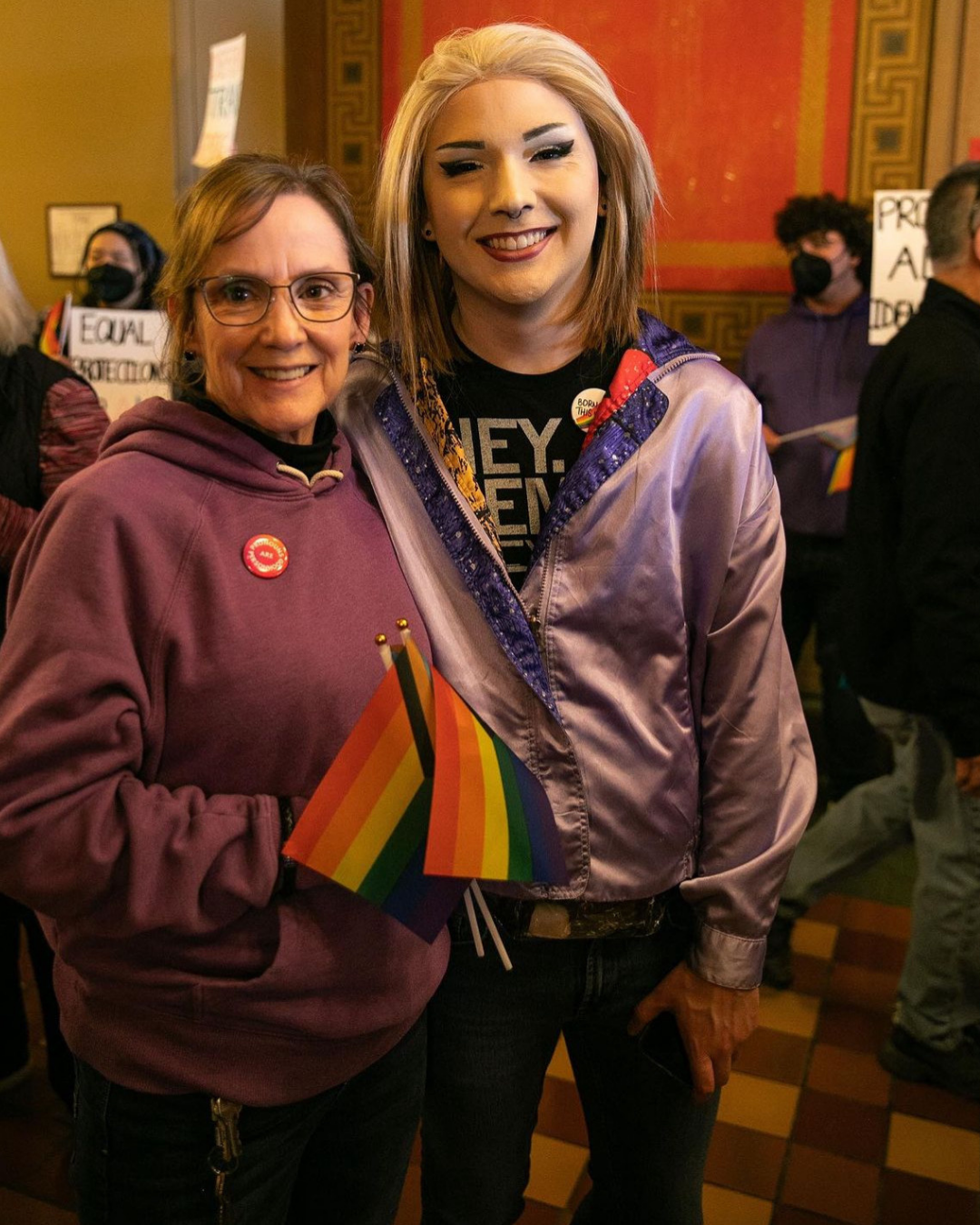
It’s disheartening to have a trans-femme child who I have watched struggle immensely finding their place in this world, one who often limits their expression, their truth, and their love because they do not feel safe enough to present in this world the way they wish to.
In a time where politicians are trying to decide for us, we must stand up and fight back.
Women deserve the right to decide for ourselves what happens to our bodies, with our reproductive organs, and how we move about this world.
Our medical and personal decisions should be, must be our own.
When I think of powerful moments in women’s history, I think of Marsha P. Johnson. A revolutionary movement in her own right. Marsha was a tireless LGBTQIA+ activist whose leadership during the Stonewall Riots propelled LGBTQIA+ rights forward. Beyond the front lines, she offered radical care to friends lost to the HIV/AIDS crisis and co-founded STAR with Sylvia Rivera to provide a sanctuary for unhoused transgender youth.
By centering the most vulnerable, Marsha redefined feminism to include those the world has tried to forget, tried to push out.
In more recent years, I’ve been moved by the artistry and advocacy of Laverne Cox. As a groundbreaking actress and role model, her presence on major platforms has done more than just entertain, it has humanized transgender identity for millions of viewers worldwide. In a landscape where politicians and extremist groups frequently attempt to silence and erase trans voices, there is profound power, love, and bravery in Laverne living authentically in the public eye.
While on screen representation is critical, representation in our government is how we continue to push for change. Sarah McBride has spent her career proving that her identity is just one facet of her profound capacity for leadership. In 2020, she made history as the first openly transgender person elected to a state senate in U.S. history, but she quickly proved that her presence was about more than just representation, it was about results.
McBride continues to lead with a focus on issues that impact all families, from healthcare affordability to reproductive freedom. She has notably focused on making government more efficient and compassionate, championing bipartisan efforts to modernize family leave and expand investment in Medicaid. By focusing on the shared needs of her constituents, while standing tall as a proud transgender woman, McBride is fundamentally redefining what it means to be a public servant in America today.
The transwomen in our lives, our families, our workplace, our churches and beyond, deserve to be loved, celebrated, and protected.
As a cis-gender white woman, regardless of where my rights currently stand, I know that it is my responsibility to stand up for those who are marginalized, have less agency, and less power than I do.
It does not escape me that I do not have the same battle as my Black, Latina, BIPOC, and trans sisters. My whiteness allows me to go about my day undisturbed: no second looks while I’m shopping, no traffic stops because of my skin color, no harassment just for existing.
Witnessing the systemic violence my sisters endure is what calls me to stand in solidarity with all women. We must fight for our collective liberation, together.
I believe that transwomen are women. They should be protected, uplifted, and celebrated.
I believe that Black and BIPOC women are systematically harmed and disenfranchised.They should be protected, uplifted, and celebrated.
I want my grandchildren, my children, my family, and my friends to know what it means to have their rights protected, to have full autonomy over themselves and their decisions, and to know a world that loves them for who they are.
We are obligated to uplift all women, tell our truths, and change the world, together.
Women deserve to be celebrated and uplifted for their fearless pursuit of authenticity, justice, and dignity.
Women’s History Month matters because women are history in the making.
%20(1).png)